3 tips for growing your Facebook page
A new resource for Democratic activists in NH (and beyond?)

My day job is marketing large businesses. I’ve spent my ~15-year career planning and creating content that generates brand awareness and drives growth. Developing search engine optimization (SEO) strategies that attract the right Google-searchers. Writing social posts that stop the scroll (for a moment or two).
But my newfound (and mostly unpaid!) evening job is marketing causes and campaigns. I discovered a few years ago that I can easily translate the skills I’ve honed as a professional marketer to the political arena. And frankly, the political arena needs it—especially my blue friends.
For the past year, I’ve been Chair of my local Democratic committee, the Goffstown Democrats. I’ve been working to grow our public Facebook page following and engagement, grow our private Facebook group, increase attendance at our monthly meetings, recruit and promote new candidates, and more.
I’ve also been working with Steve Marchand and Shana Potvin of Move the Goalposts NH to create content that resonates with the independent voters we have to woo this fall.
In this Substack, I’ll be sharing:
Professional marketing tips and best practices (content, social, design, video, etc.)
Lessons learned in the political marketing arena
How other Democratic activists can grow communities and advocate for the things they care about
If you’re an officer for a local Democratic committee, a candidate for local or state office, or you run marketing for a cause, hit that subscribe button. 👆
Oh, and if you need some professional help now, check out my website.
3 tips for growing your Facebook page
For this first post, let’s cover three easy ways to grow your following and engagement on a public Facebook page (like the Goffstown NH Democrats page).
Remember, a Facebook page is public. Anyone can see it, and only page administrators can create can posts on the page. Facebook pages are often used for raising awareness of the committee or candidate and sharing information with the broader community.
This is different from a Facebook group, which can be public or private. Group settings vary, but typically, any member can post in a group. Groups are often used for discussions about issues, candidates, and events. Some groups are set to private and used for private Democratic conversations that activists don’t want the opposition to see (although I advise against relying too heavily on this assumed privacy!)
1. Create your own posts
Sharing content from other people and pages is a good way to supplement your own content—but you should not rely exclusively on sharing from others. The Facebook algorithm, which determines how many people see your posts, deprioritizes content you’ve shared from other accounts. In fact, it only receives a small fraction of the impressions original content gets.
Take this example from NHDP Deputy Executive Director Sebastian Fuentes. One week, he used our Move the Goalposts content to create his own original Facebook post. The next week, he re-shared a post directly from Move the Goalposts’ Facebook page. The original content got 2x as many likes and about 6x as many shares compared to re-sharing the existing post.
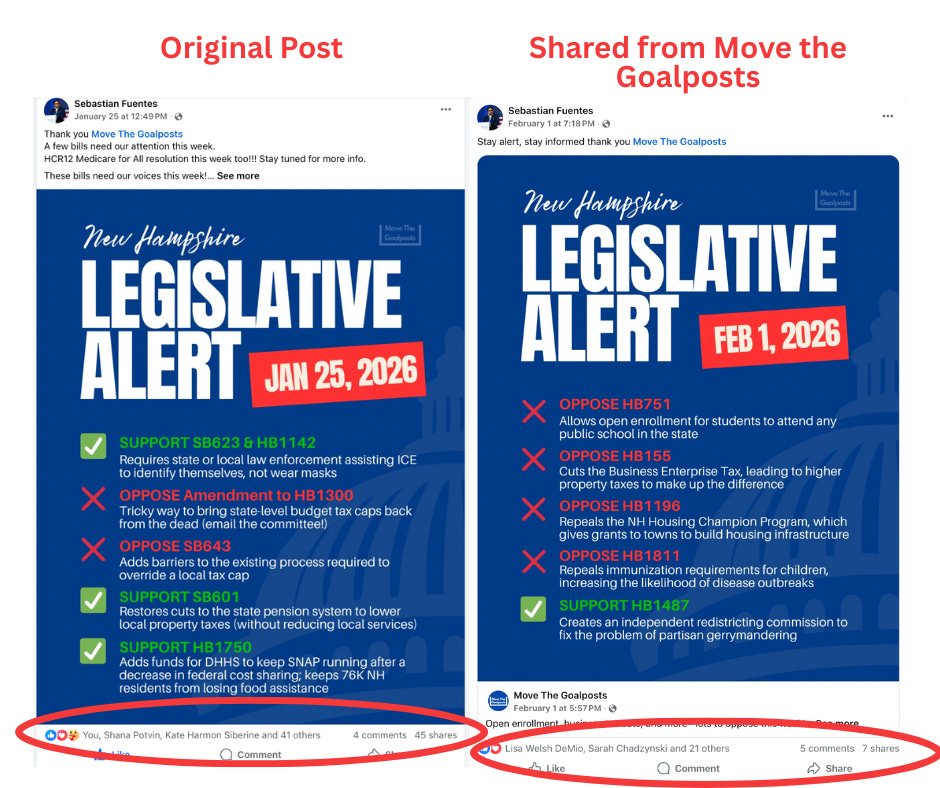
The lesson here is to share as much original content as possible—but there are still shortcuts you can take if you don’t want to become a full-time social media manager:
Copy/paste is your friend. If you see a post you like from another committee, cause, or candidate, just copy the text and the graphic and paste it into Facebook to create your own new post. Make sure to give the original creator credit, though. One easy way is to tag that creator in your new post, like Sebastian did above for Move the Goalposts.
Sign up for Move the Goalposts’ ‘We are the Media’ platform. Steve, Shana, and I have been working since last summer to create a library of ready-to-go social media content customized to each town in New Hampshire. It’s free to any Democratic activist who wants to use it. Drop me a line if you want access.
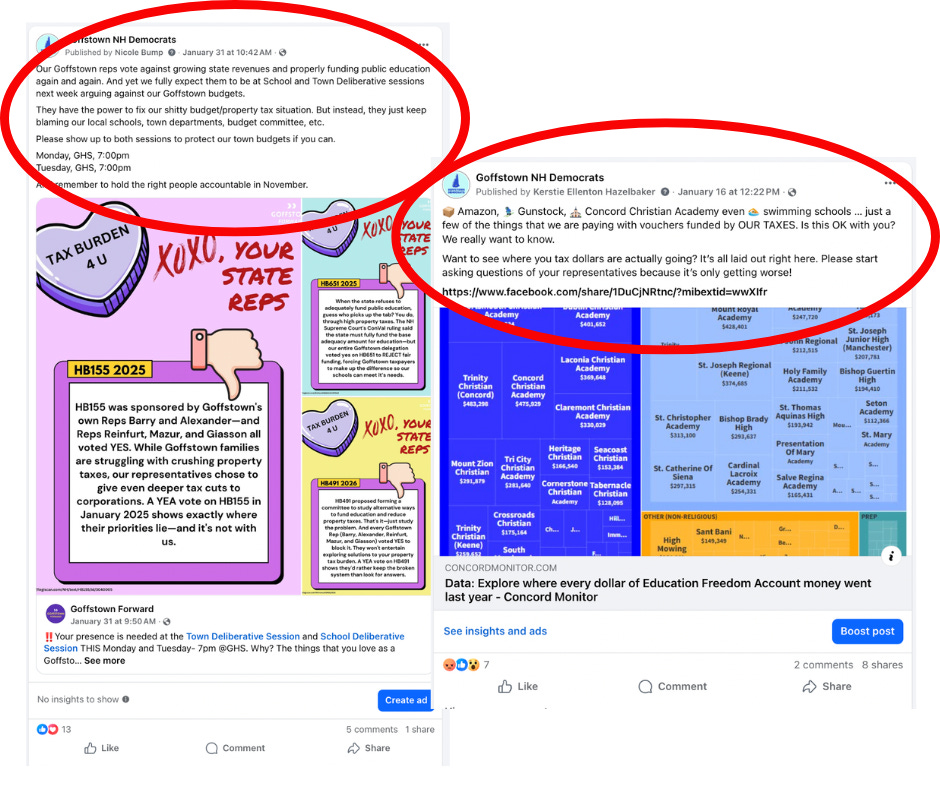
2. Add your own commentary
When you do share a post from another page, add your own commentary. People want context for why they should care. Consider:
Does the article or bill have a local angle?
Does it personally impact you or your community in some way?
What do you want your followers take away from the post?
Add those details when you share.
3. Invite friendlies to follow
‘If you build it, they will come’ is totally false when it comes to Facebook pages. You need to actively invite people to follow.
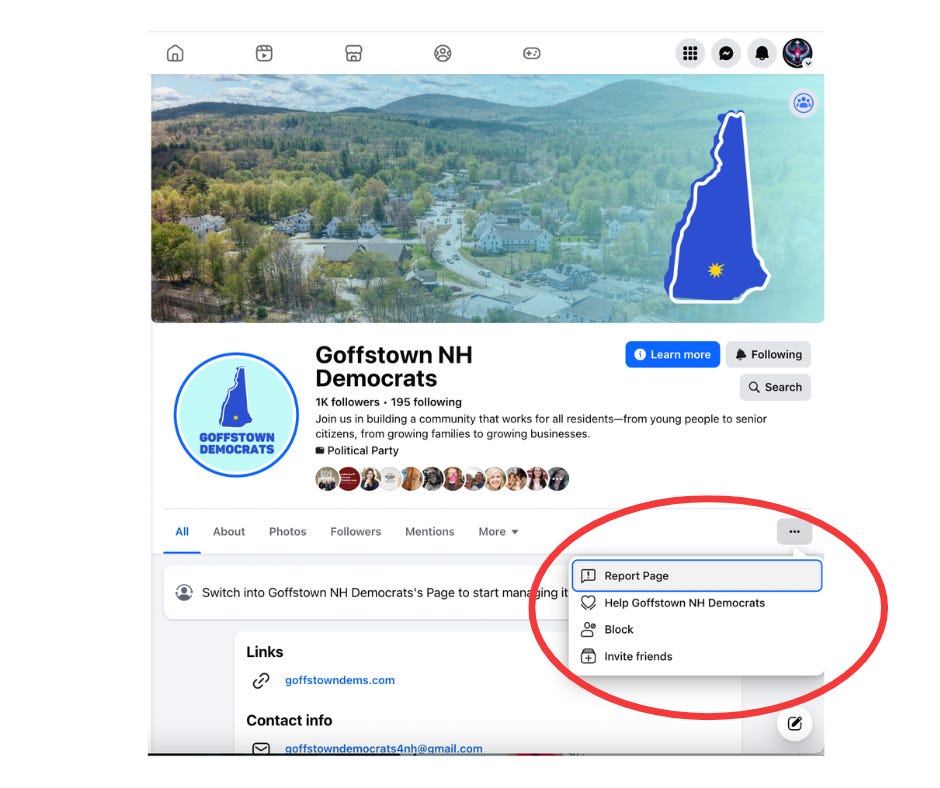
The first step is to invite people you know to follow your page. For example, if you and your fellow Democratic committee officers are running a page, you should each invite local left-leaning friends.
From your personal account, visit the Facebook page.
In the top right, choose the button with three dots.
Select Invite friends.
Choose friends to invite to follow.
Ask all of your officers and active members to follow the same process.
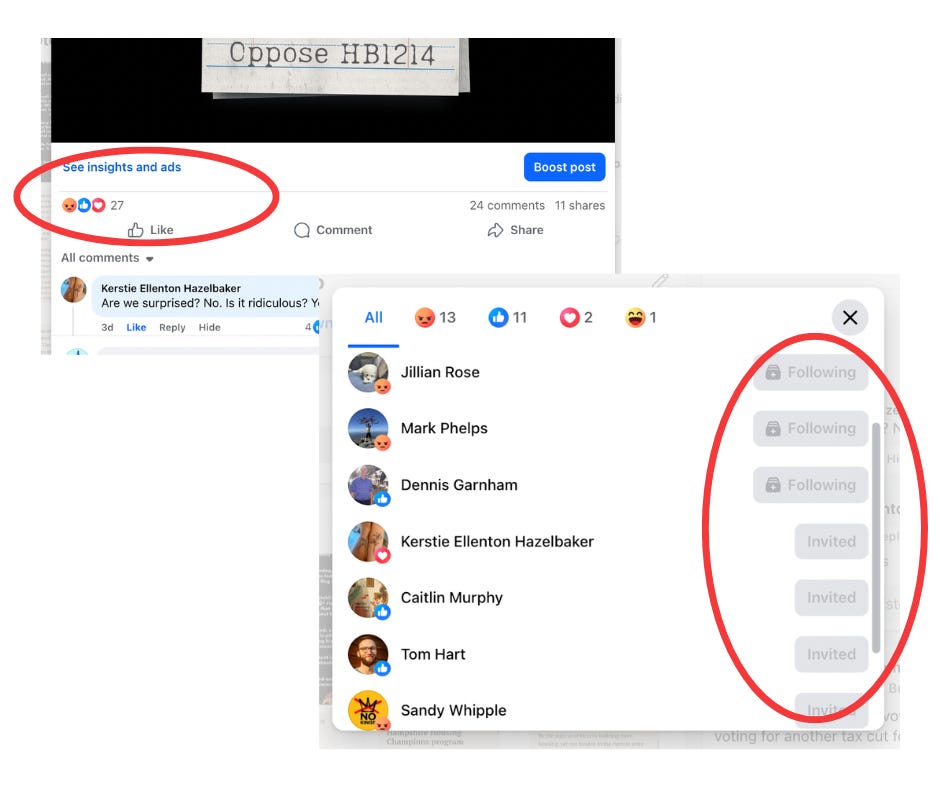
Next, when new people interact with your Facebook posts, you should also invite them to follow the page.
From the page account, click the number of likes on any post.
A box pops up with the names of the people that interacted.
Use the buttons on the right to invite them to follow.
Subscribe for more
If you found this post helpful, please subscribe and share it with your fellow activists. I can’t promise a content cadence yet, but I’ll be back with more tips in the near future. If there’s anything specific you’d like to learn about, let me know in the comments. ✌️